


Now Reading: Was the right choice made?
-
01
Was the right choice made?






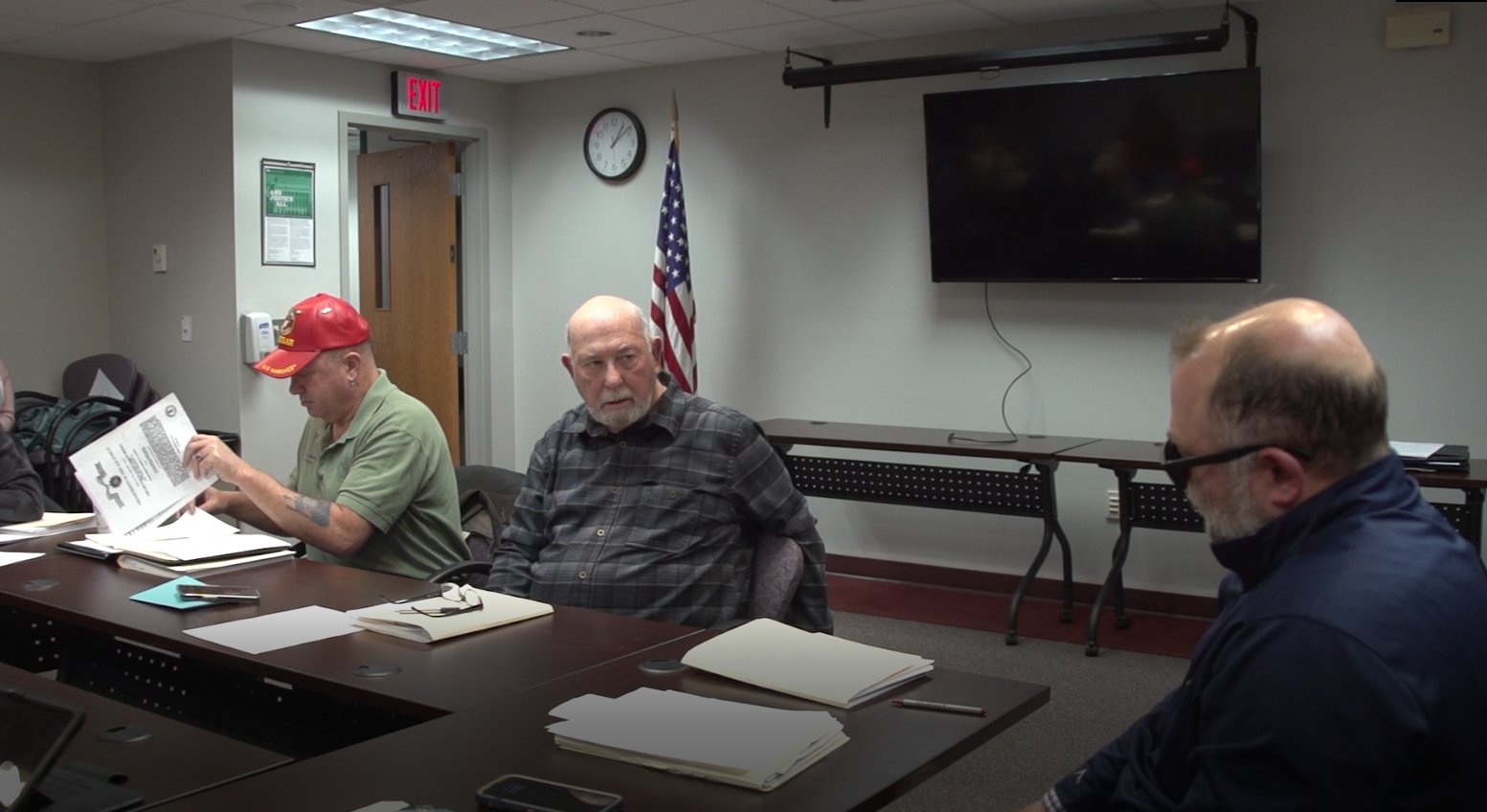
Vision Pro Studios of Coldwater, MI attended the open public board meeting with the Veterans Supervisors, and the County Commissioners. This meeting was set up to go through 21 applicants for the Veterans Service Officer position which is being vacated by Charles Scott. More on this later in our post.
Two new members were present who had recently been chaired and were also a part of this meeting. Long time member Rod Onley, who mainly conducted the meeting, Tom Lathamer who was recently elected, Andy Labadie who also was recently elected, Terry Andress and Dennis Hopkins
Within roughly 10 minutes, tensions at the board meeting began to run high, as Rod and Andy began to exchange with what appeared to be some frustration with some of the questions Andy had asked. In the clip below, the County Commissioners Frank Walsh and Tim Stoll identify key things that the board members must recognize during the interview process, including questions that can be asked of the applicants. Andy, being the newest member of the board, had not taken the opportunity to introduce himself. This clip shows how the meeting progressed with Rod and Andy as they moved forward. The second clip is discussed below.
In this second clip below, Commissioner Tim Stoll makes reference to the type of questions and qualifications the candidate would have. Official Veterans requirements for a VOS is a preferred college degree in a field that relates to the position, but does not have to be a requirement. Mainly, it depends on the area that veterans are located as residing in the county of the service, having a college education and /or a combination of education and work experience that would achieve the same result.
VSOs are typically accredited by the U.S. Department of Veterans Affairs (VA) or other recognized organizations to represent veterans in obtaining benefits.
Many organizations, like the American Legion, offer training programs to prepare individuals for the VSO role. This training often includes topics like claims processing, eligibility, appeals, and VA regulations. Some positions may require a bachelor’s degree in a related field like social work, counseling, or public administration. Others may accept a combination of education and relevant experience, such as working with veterans or military associations. A deep understanding of federal and state laws and regulations governing veterans’ benefits is crucial. This includes knowledge of compensation, pension, healthcare, education, employment, housing, and other areas where veterans may need assistance.
VSOs must be able to communicate effectively with veterans and their families, explain complex information clearly, and build trust. VSOs act as advocates for veterans, helping them navigate the VA system and ensuring they receive the benefits they deserve. This often involves managing cases, gathering evidence, and representing veterans in appeals processes. VSOs need to be organized, detail-oriented, and able to manage multiple cases and deadlines effectively. A genuine desire to assist veterans and a compassionate approach are essential qualities for a VSO.
Some counties and states have dedicated Veterans Service Officer positions. These roles often involve assisting veterans in accessing county, state, and federal benefits. The VA accredits individuals to represent veterans in claims processes. This accreditation involves meeting specific requirements and passing exams. The National Association of County Veterans Service Officers (NACVSO) offers the Certified Veterans Advocate (CVA) program, which provides specialized training and certification for veterans service professionals.
In summary, becoming a VSO involves a combination of training, knowledge, skills, education and dedication to serving veterans. By gaining the necessary qualifications and accreditation, individuals can play a vital role in supporting veterans and ensuring they receive the benefits and resources they deserve.
Listen as the board begins to start the process, and pay close attention to the directions that Rod Onley gives to the group. Pay close attention to the 1st resume, the 10th resume, and the 19th resume. These three are edited so that we do not have to watch the entire meeting. They will be the only three applicants that the board decides to bring in. Rod begins to describe the first candidate. On this particular resume, he only spends roughly 25 seconds total before he is suggesting to the members of the board that it should be considered. (It is to be noted that Resume #1 was Nick Easterling)
Once again, Rod becomes angry with Andy regarding a question or an answer he interjected. In addition, when Tom Stoll asks about the qualifications, it appears that a board member thinks that Military Experience is a requirement. A Veteran Service Officer (VSO) in Michigan does not need to be a veteran. To become an accredited VSO, a person must pass a background check and the VSO exam.
VSOs are not federal employees. They work for Veterans Service Organizations (VSOs), which can be nonprofit organizations or local, state, county, or tribal government agencies. Later in the meeting it was discussed what the Board Members had decided upon as to what requirements they were requesting. Board member Dennis Hopkins speaks up and states that one of the requirements they wanted was a college education. This was quickly denied by Rod Onley.
The next short clip is Candidate #10 Parker Radcliffe who did not show for the interview. Off camera, several attempts were made to get in touch with him by phone and by more than one board member. It was never discussed or for what reason Parker did not attend his interview. The third candidate is Whitney Lewis. According to the Coldwater Daily Reporter, Whitney had already been recommended for the VOS position by all four County Commissioners on October 11th, 2024. The Coldwater Daily Reporter stated that “by law” the County Commissioners cannot choose the candidate, and the Supervisors Board has jurisdiction to award the position by a 1953 Michigan Compiled Laws Act. The act specifically states that it may contain outdated information regarding to the procedures of appointing a VSO. The following appears in this act however as a guideline to choosing the VOS:
35.623 Administrative committee of county department; selection of officers, expenses;
veterans’ service officer, appointment; offices. Sec. 3. The committee shall select a chairman and a secretary. The committee is authorized to incur such expense as shall be necessary in carrying out the provisions of this act within the budget set up by the board of supervisors. The members of the committee shall be entitled to receive the same per diem and mileage in attending meetings as members of the board of supervisors. The committee shall appoint a veterans’ service officer and such other employees as shall be necessary from time to time to carry out the provisions of this act. In the selection of the veterans’ service officer hereby authorized, the committee shall consult with and request the assistance of any association or council of organized veterans in such county, and any recommendation from such association or council of veterans as to the personnel to be appointed by said committee under the provisions of this act, while not binding on said committee, shall be given the greatest consideration. The board of supervisors shall furnish, equip and maintain reasonably adequate office facilities for the county department of veterans’ affairs.
This law was never discussed at the Tuesday meeting prior to the interviews. It was noted by the Coldwater Daily Reporter that the Supervisors of the County Board had jurisdiction over who could be chosen as the VOS chairman by citing this law, however the wording states differently. Although the Supervisors were not bound to chose someone that was recommended by the four county commissioners, that person was to be given the greatest consideration. That person would have been Whitney Lewis, who had been confirmed by the County Commissioners unanimously to be considered for the position.
The following videos are Nick Easterling and Whitney Lewis Interviews. Please take note, that during the interview of Nick Easterling and Whitney Lewis, they were asked the question had there been “any time where their ethics or morals had been compromised during their career”. According to the Veterans Administration Federal Website, a VOS is not allowed to take a “gratuity”. This infraction typically carries disciplinary action including and up to discharge from the Veterans Board with an investigative approach regarding the amount, and why the Veteran would have given the gratuity to begin with. Partiality and/or Fraud are factors that could be investigated. Nick Easterling stated that he had taken a gratuity on more than one occasion. Nick did not state what amount was given but also stated that his Supervisor told him to just keep the money and use it for his family. Even after discussing this with the board, no board member asked if Nick had received any disciplinary action in regards to his admission. Nick closed the question with a statement that he “doesn’t need the money” to accept a gratuity again.
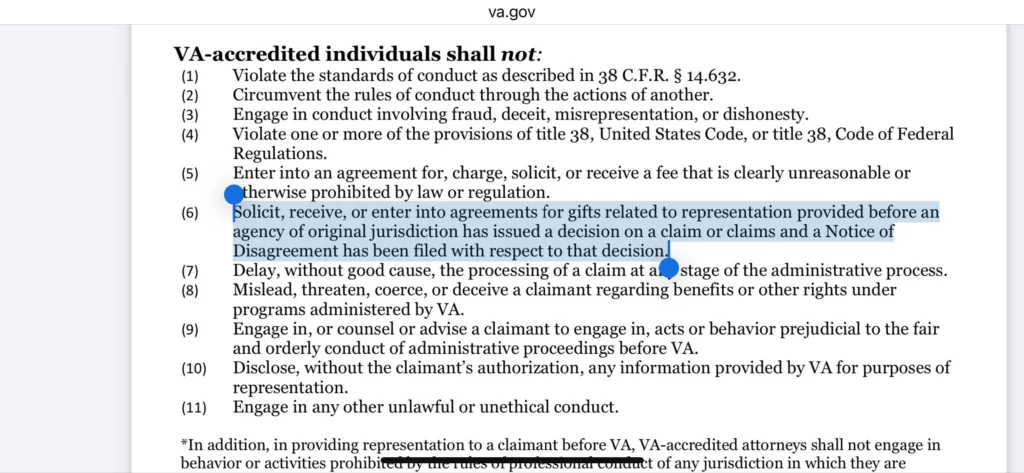
However, this was another missed and ignored statement by the board to ask questions in regards to Nick’s financial status at the time of the infraction, and insinuating that he chose to take the gratuities because he “needed the money” and that his supervisor gave him permission. Nick has no college education, which is preferred but not required, a retired disabled 15-year veteran Army staff sergeant from Hillsdale, has been the southwest Michigan veterans service officer for the Vietnam Veterans of America since 2016.
He concurrently served as a service officer for four years with the Military Order of the Purple Heart. The five board members echoed Terry Andress’s thought: “The smoothest transition would be Nick because of his familiarity with the procedures, his qualifications, and his certifications already.”
Easterling worked out of the Coldwater office at times with his position.
All of them praised Lewis as an almost equally qualified candidate who could get her national certification in a few months. But there was things that were discussed during Whitney’s interview that suggested the Board may have been biased in their choice. A conflict between the Veterans Board and Branch County Commission began Oct. 8, when commissioners interviewed candidates for the service officer positions, selecting 4-0, the retired Air Force Sgt. Lewis.
Earlier, the Veteran Board selected Scott’s daughter, Jacqueline Yap, in a 2-1 vote by Andress and chairman Rod Olney.
Commissioners learned that a 1953 state law gave the Veterans Board independent authority for the appointment. However, that law may contain outdated information and was warned not to depend upon its’s accuracy. There was no communication from the Commissioners or from the Supervisors if they had contacted the Veterans Administration, or the State of Michigan to see what updates had been possibly made. And the independent authority claimed to be given to the board was indeed to give the applicant whom the Commissioners recommended the greatest consideration.
This was our first time covering a public meeting with the Veterans Administration. Nearly 1 full day combined between the meeting and the interviews was recorded and analysed for transparency and fairness. We first wish to thank the public meetings act which however became a controversy and a subject of frustration for Rod Onley, and other members of the board who had during the Tuesday meeting (full meeting below) expressed their frustration over posting the meeting, taking minutes, posting the position, making remarks that insinuated that for 22 years they had conducted meetings without following the guidelines and had no problems, but then adamantly and without recourse or what appeared to be research of any outdated information, followed a 1952 act from the state of Michigan that is clearly stamped ARCHIVED and may contain outdated information.
In addition, Whitney Lewis’s experience and education according to the Veterans Administration would be highly qualified for the position of VOS. Listen closely in the interview video of her qualifications, her positive vibe, and the way she handles herself. What has caused such a controversy regarding this position, was the strict ethics that Whitney stated she has. She contacted the necessary individuals and by her own investigative research, learned that the VOS Charles Scott was going to retire and his daughter was going to be given the greatest consideration for the position. Whitney claimed that this was unfair and considered Nepotism, which seems to happen more frequently in local, state and federal positions, however still suggests that it is unethical to do so. In addition, there was some disagreement on how finances may have been handled regarding the fleet of vans, and it launched an audit from the state or federal level.
These issues were presented long before her second interview with the board members who were all familiar with the allegations. Some of them communicated at the Tuesday meeting of their frustration over what Mrs Lewis had discovered. Our opinion is that this meeting had a large degree of transparency, but suggested that it was not welcomed by Board members. In addition, it suggests that Mrs Lewis was treated unfairly, that she had far more superior knowledge and education than her counterpart, and that what she lacked in knowledge as perceived by the board, (who in our opinion spent very little time in comparison of these two candidates), would have strongly suggested that even though Nick Easterling was already filling in for the absent Charles Scott, had the experience to work the VOS position temporarily, who also lives in Hillsdale County, and admitted to a unethical decision that from what the board knows, may have or may not have received disciplinary action…would have been a slam dunk for Mrs Lewis, who could have worked the position easily, gaining training that is provided by the Veterans Administration that Nick Easterling already had. It may be possible, that the training would have come from Nick Easterling himself, or as Mr Onley had stated..”nobody taught us this positions” and she could have been trained online by the Veterans Administration state website.
Our final thoughts are, we just couldn’t see how the board came to the conclusion that Nick easterling was more qualified for the job than Mrs Lewis. That’s not a biased statement, because until their interviews, we had not met either of them publicly.
As stated by the Coldwater Reporter, the board had suggested that Nick was the best choice for a “smooth” transition. Mrs Lewis had new and fresh ideas that she wanted to implement, wanted to work closely with VETS in counseling with her Social Workers Degree and psychology knowledge, something that is affecting VETS all across the USA. Every day, 22 vets across the country commit suicide. And having someone like Whitney lewis in a position of VOS could very possibly save lives.
Now, its up to you to decide. So post your comments below.
Related Posts



Previous Post
Next Post











Advertisement